Product Design · Wearable + App
Guardian Link
Role
Design lead on a team of four: user research, app interface, the pendant's 3D model and the logo. Teammates covered statistics, finance and mechanical engineering.
Duration
2023
Type
Team of four · UC Berkeley · Brief: Living Alone
Skills
User Research, Concept Selection, App UI, 3D Modeling
Tools
Figma, Fusion 360, 3D Printing
Coming home late, alone, in a city you just moved to. We designed a necklace that gets help without reaching for your phone.
Hold the pendant: your location goes to people you chose, and it lights up and sounds an alarm. The app shows what happened nearby.
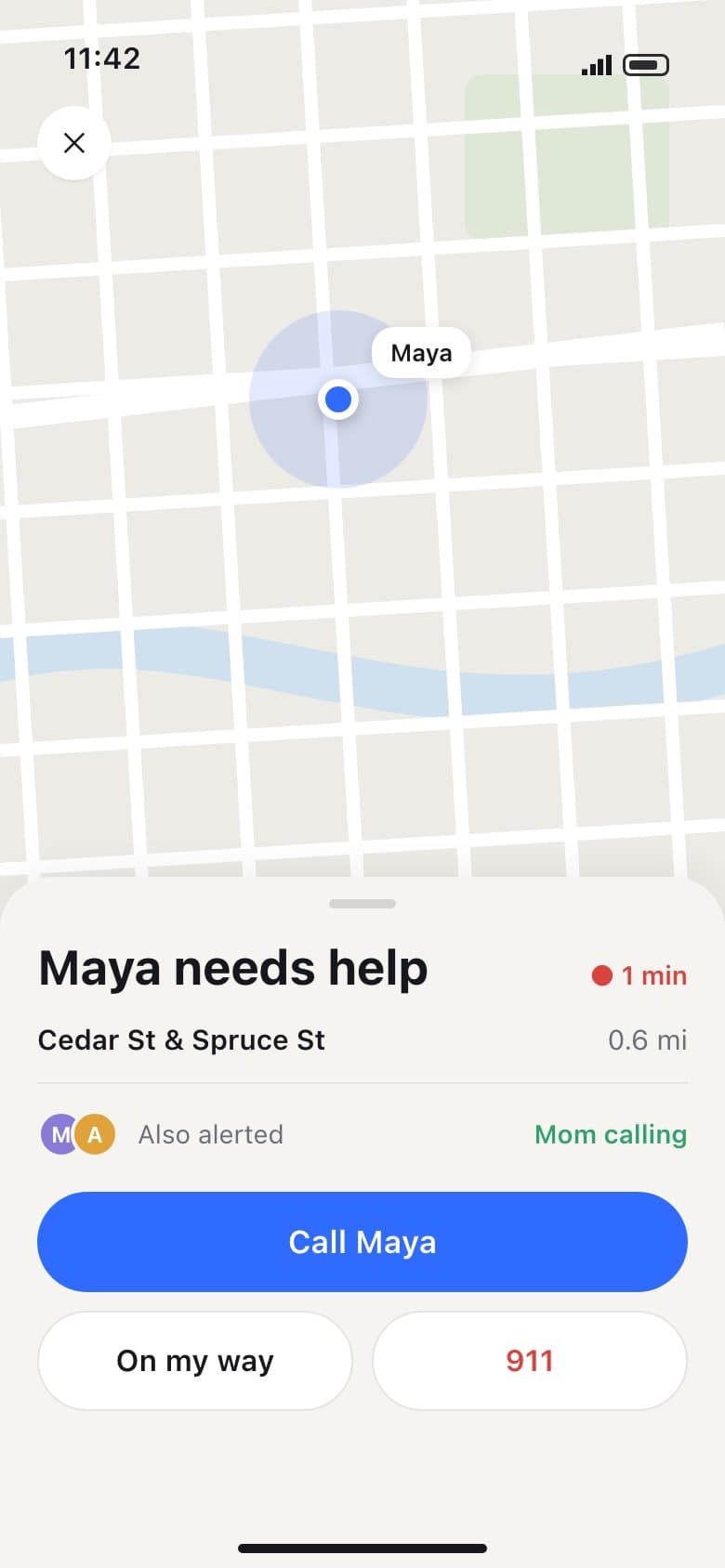
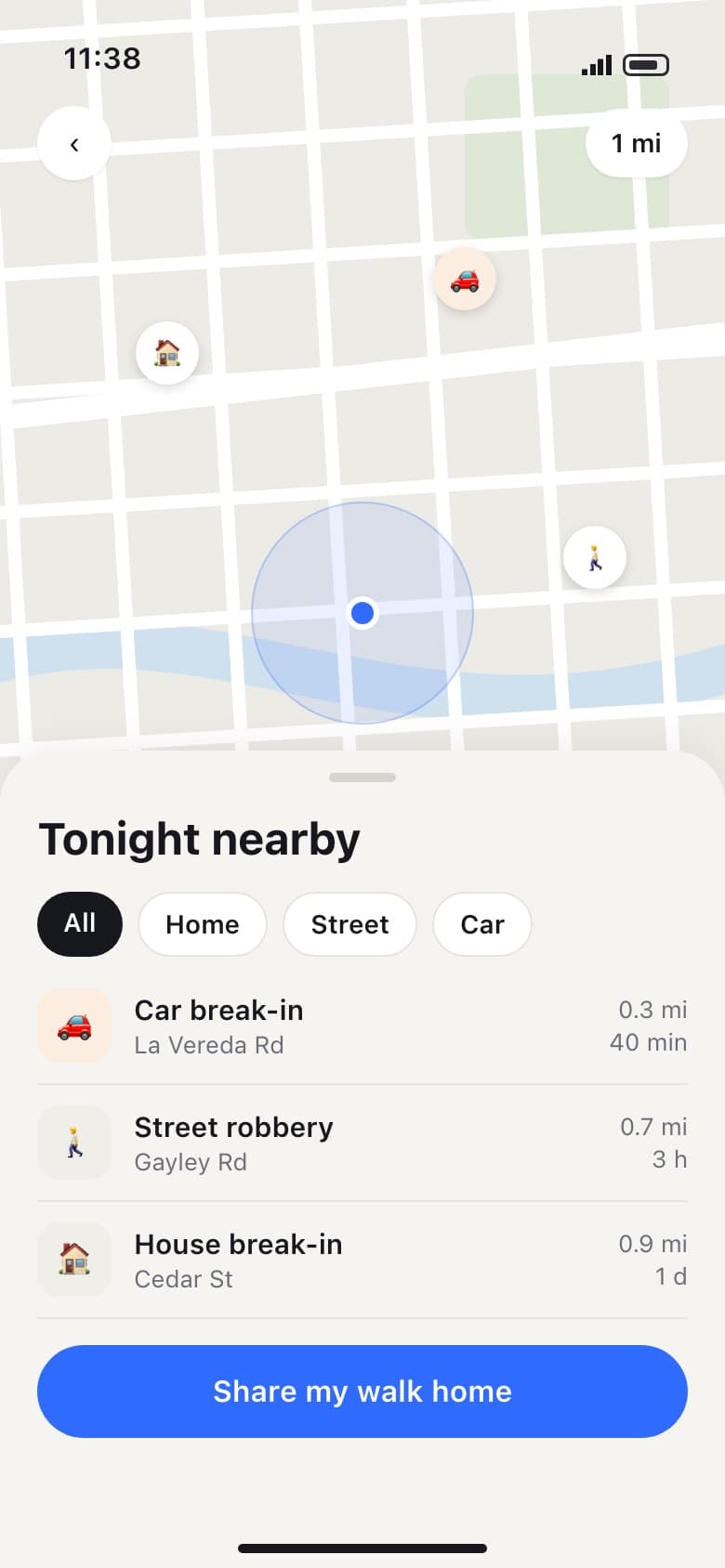
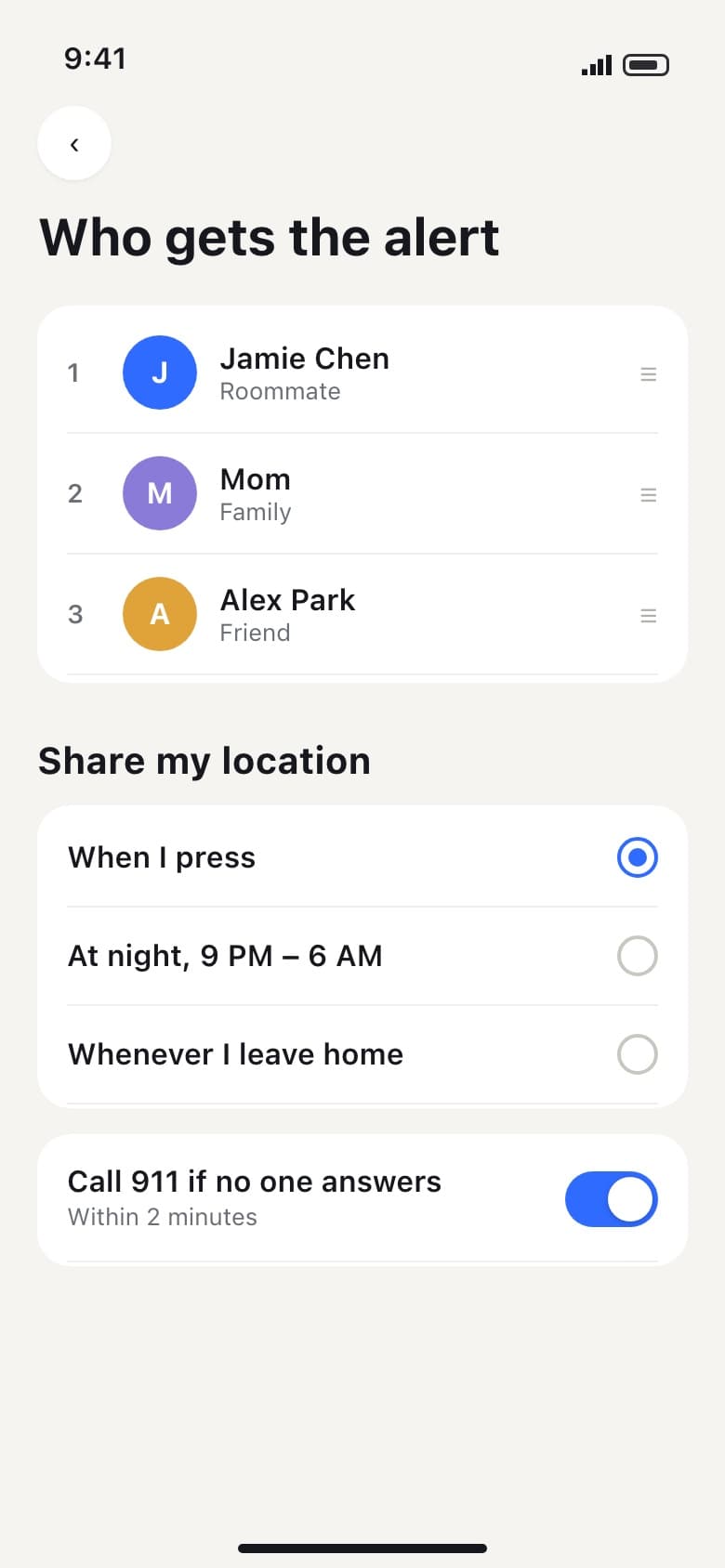
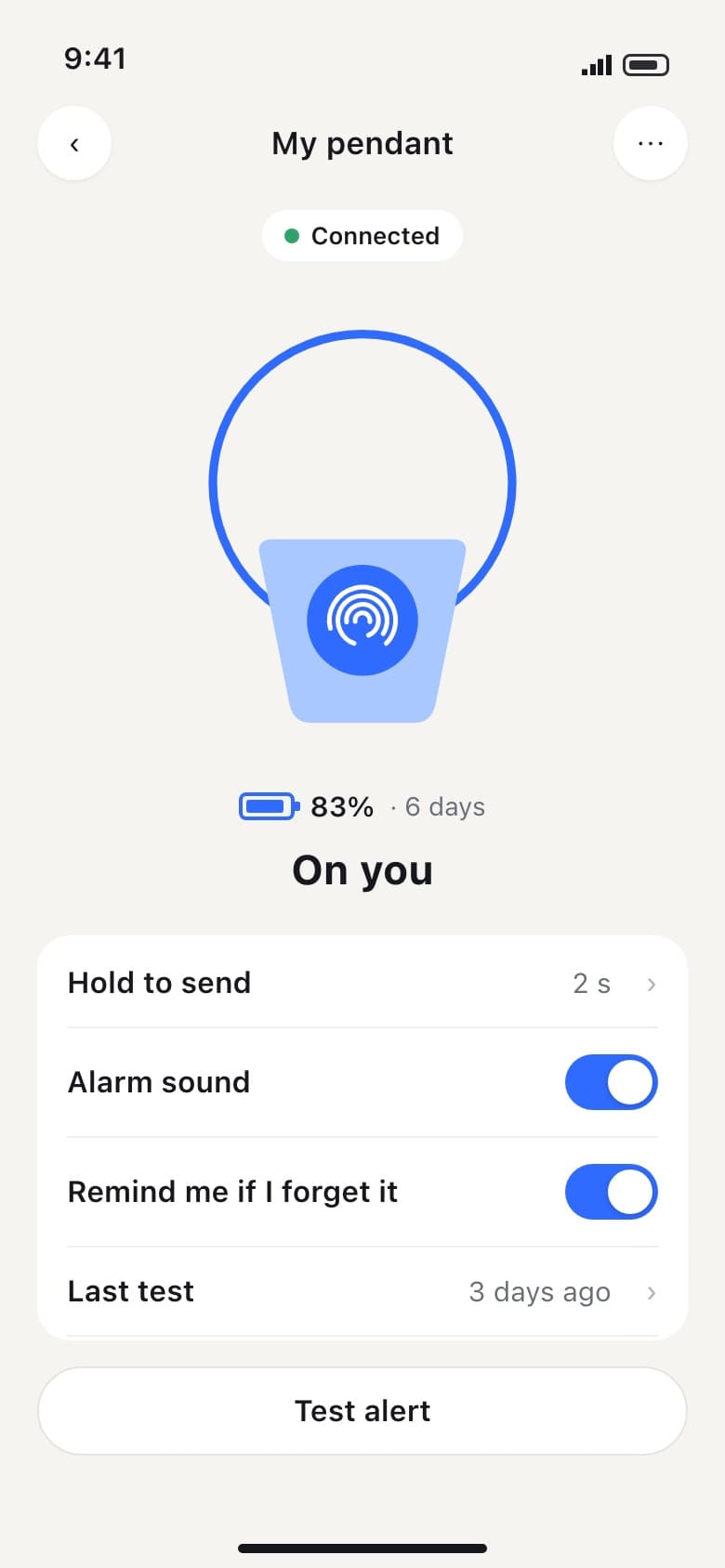
The companion app, redesigned in 2026 from our 2023 concept.
- Problem
- The walk home at night is when people living alone feel least safe, and a phone is slow to reach.
- What we learned
- One button you can find without looking, worn by choice, sharing location on your terms.
- What we made
- A pendant that reads as jewelry, a hold-to-send alert, and an app that tells friends what to do next.
We started with living alone, not with safety
The brief was open: the barriers of living alone, from privacy and social life to health. We wrote 51 "how might we" questions and scored the strongest on six criteria.
Scored on
Safety came out on top: how can technology protect young people who live alone?
51"How might we" questions
Safety, top of the six criteria
Then we checked whether safety was worth solving
A high score doesn't mean it matters to people, so we went and asked.
Who we designed for
Matt, 19
First apartment after the dorm. Unsure the neighborhood is safe.
Jenny, 24
New job in California. Often walks home late through a high-crime area.
They wanted one button they could reach without thinking
6of 7
An SOS button came first.
Six gave it 5 out of 5. There's no time to unlock a phone.
Design principle
Reachable by touch, without a screen.
4of 7
It can't look like a medical alarm.
Four rated style highly. People want to wear it every day.
Design principle
Something you'd choose to wear.
4of 7
Location is sensitive.
Four rated privacy 4 out of 5. Users must control sharing.
Design principle
Nothing shared until you ask.
7of 7
Home is covered; the walk home isn't.
All seven already use home security like Ring. The gap is the street.
Design principle
Design for outside, not for home.
Competitors agreed: a medical pendant was reliable but nobody wanted to wear it. So we dropped home security and aimed for reliability people would choose to wear.
35 ideas, then a fair fight between the best six
From door cameras to wearables, narrowed in rounds.
35
concepts
15
after a first scoring
6
directions sketched
1
after two weighted matrices
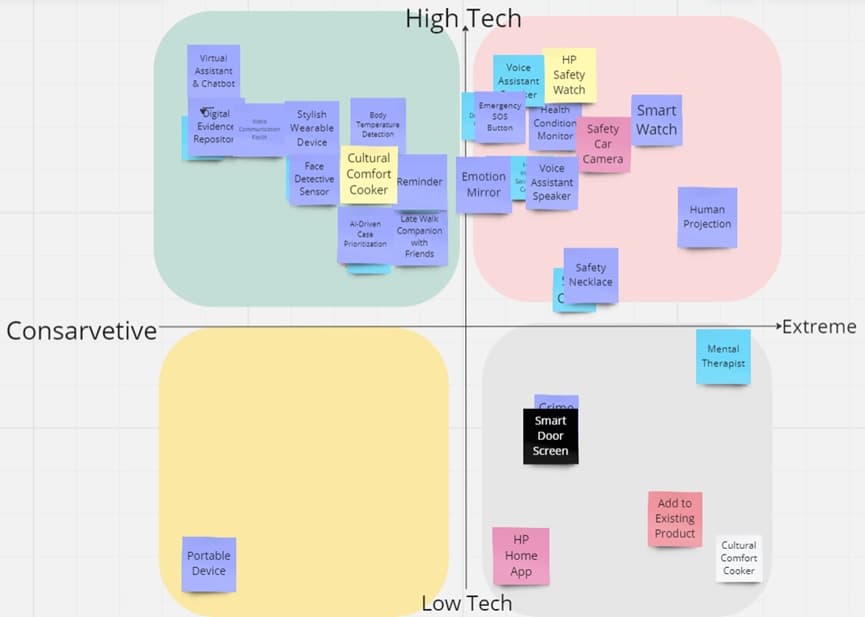
35 concepts: how much tech, how far from what exists.
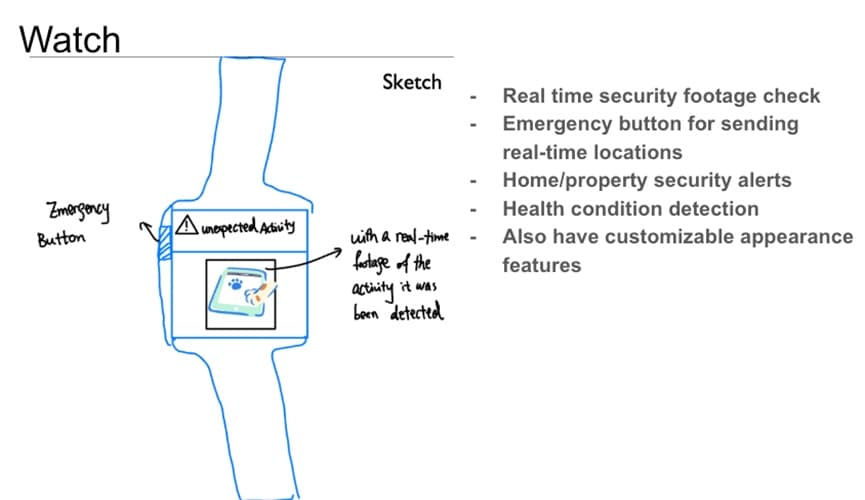
Watch.
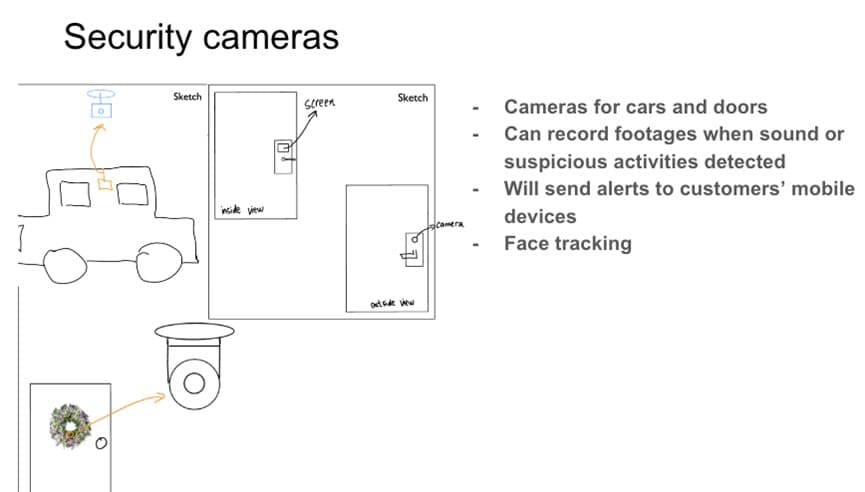
Security cameras.
The baseline changed the answer
Against a Ring doorbell, the smartwatch won. But watches already exist, so we reran it against an Apple Watch: what does each idea add beyond it?
Round 1 · baseline: Ring doorbell
1Smartwatch
2Necklace
Round 2 · baseline: Apple Watch
1Necklace
A necklace, because it is always on you
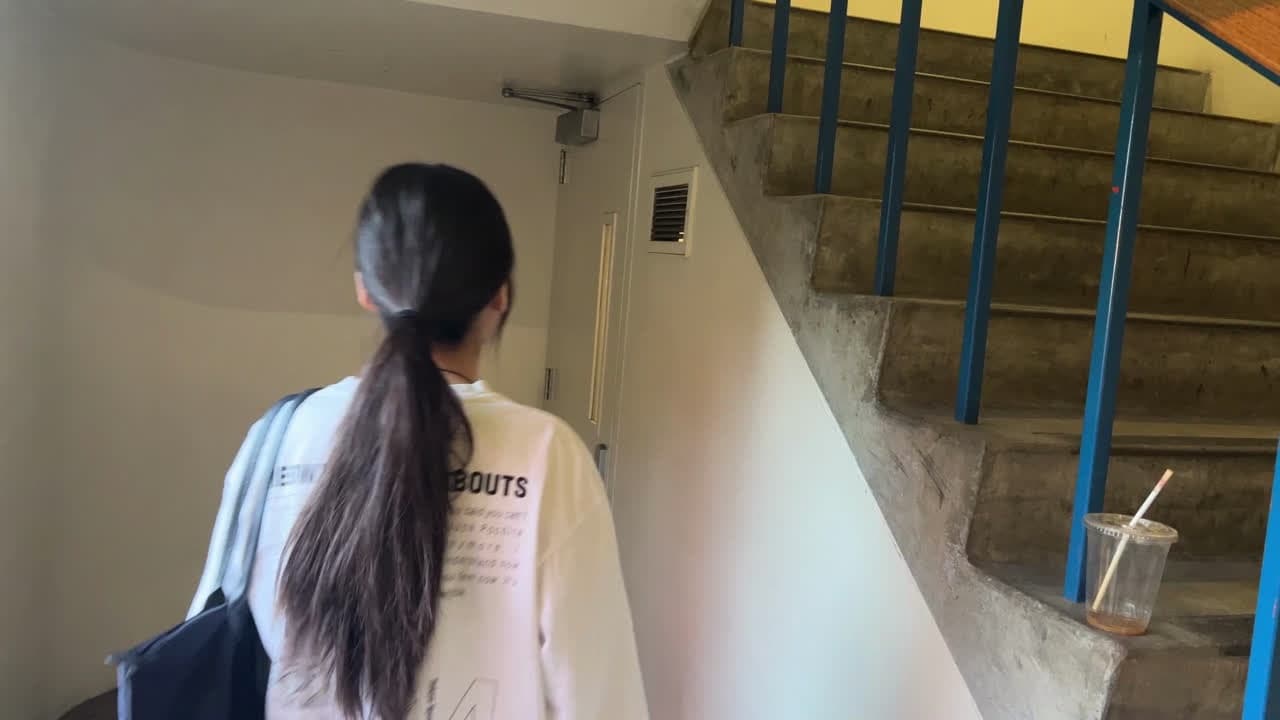
From our user-flow video: coming home alone at night.
The only direction that answered all four findings.
What users needed
How the necklace answers it
Reachable without a screen
On your chest; find the button by touch.
Something you'd choose to wear
Designed to read as jewelry.
Nothing shared until you ask
Location goes only to your contacts, only when you press.
Outside, not home
Alerts go to your contact first, then the police.
Alerts that get attention without causing panic
Left: our 2023 screens. Right: my 2026 redesign.
2023
2026
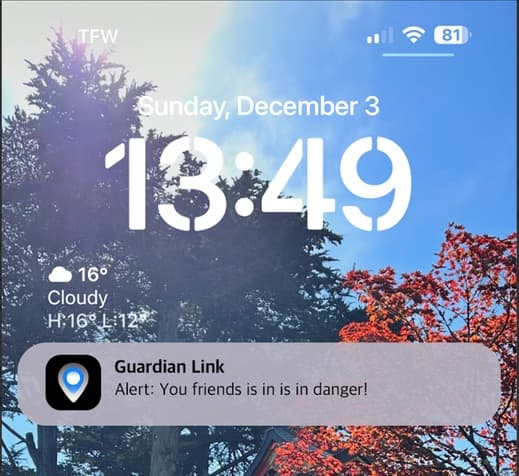
01 · A friend's alert
Noticeable, not alarming.
The old alert just said "in danger". Now: who, where, how long ago, who else knows, and one next step: call them. 911 comes second.
2023
2026
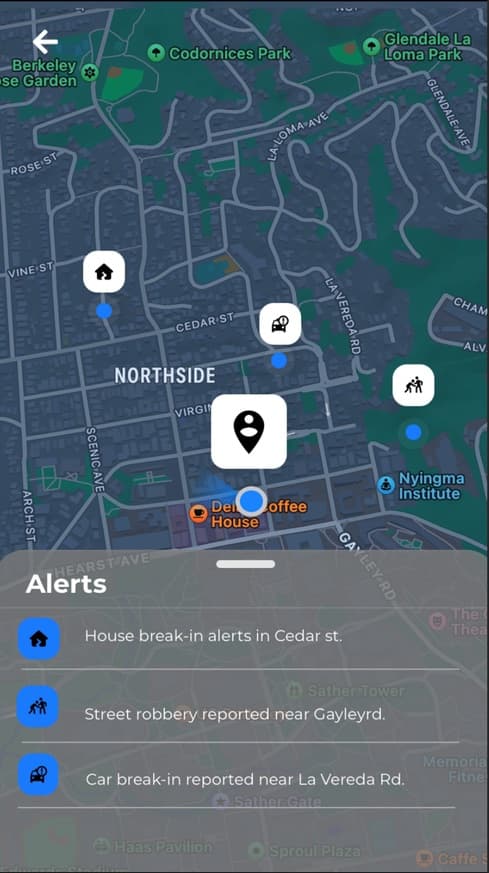
02 · Near you tonight
Each report answers three questions.
What, how far, how long ago. Nothing to read on the walk home.
2023
2026
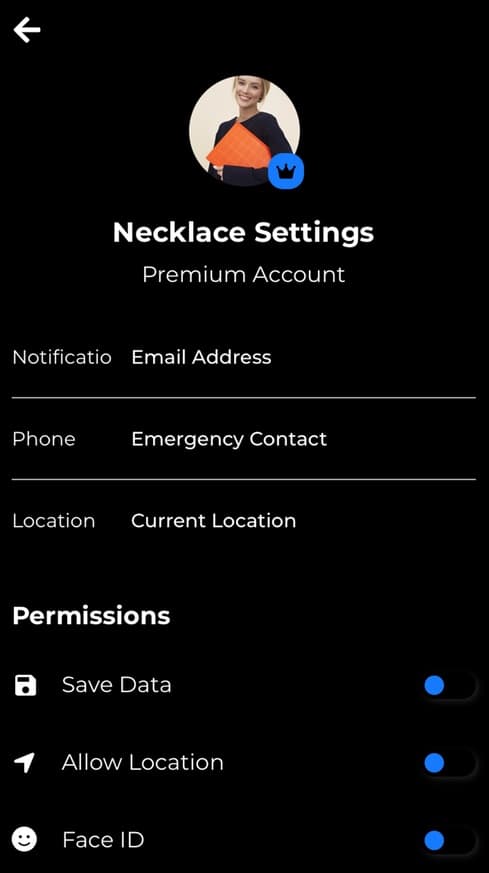
03 · Who gets the alert
Nothing is shared until you ask.
A page of toggles became two questions: who, and when. Night owls like Jenny can share automatically after dark.
2023
2026
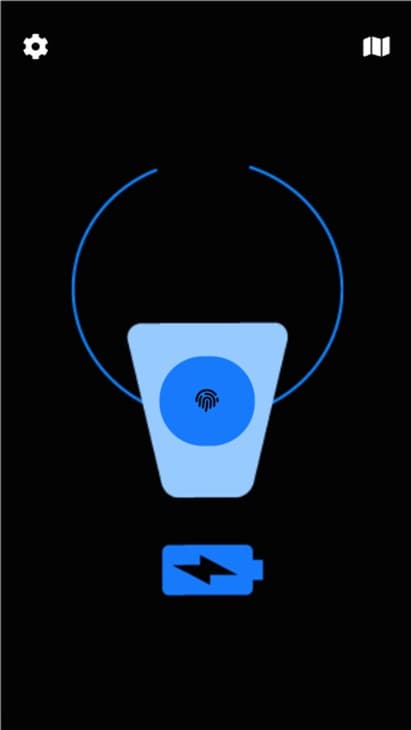
04 · Pendant status
The pendant shows whether it is on you.
A closed cord means you're wearing it. Hold two seconds to send, so it won't go off by accident, and test it before you need it.
A pin inside a pin
You, inside the circle of people looking out for you. In 2026 I redrew it with even geometry and a cleaner typeface; the same blue runs through pendant and app.
Wordmark
App icon
The 2023 original
From pipe cleaners to a printed pendant
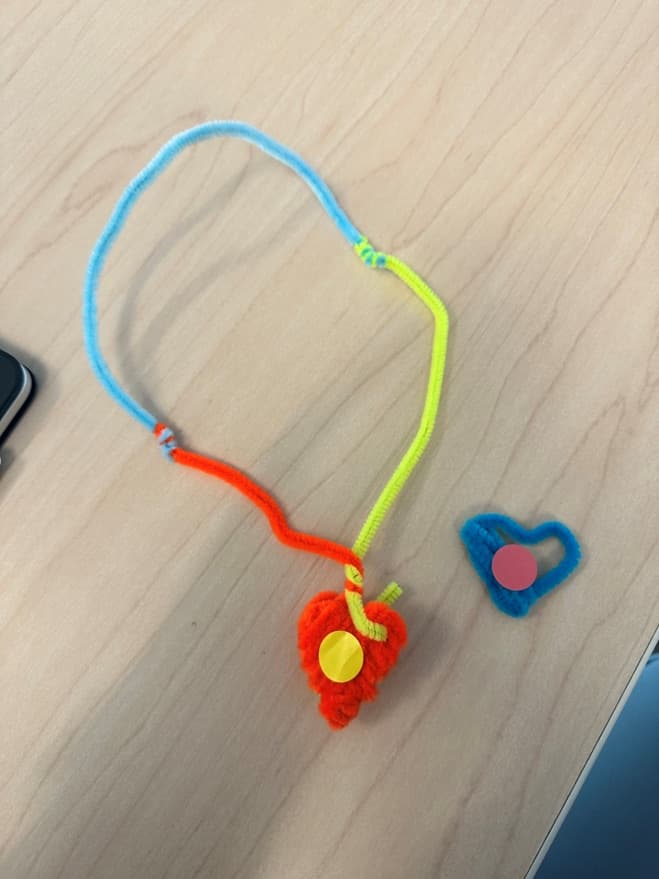
01Sketch model
Pipe cleaners. How big, and where?
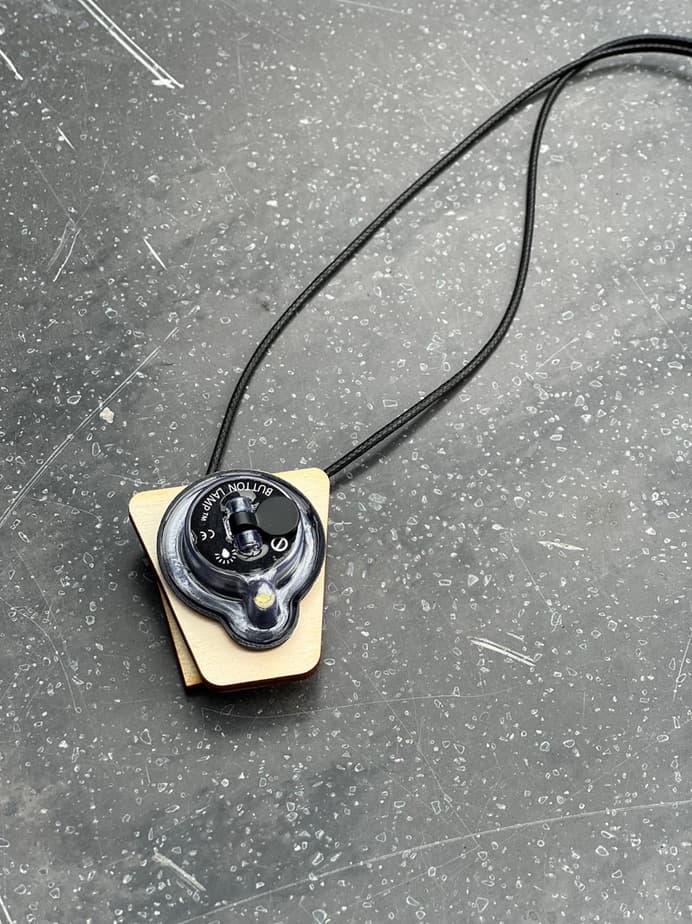
02Working prototype
A press-button lamp on a cord.
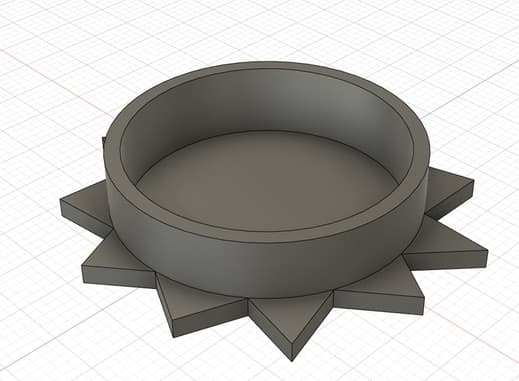
03Enclosure
Modeled in Fusion 360.
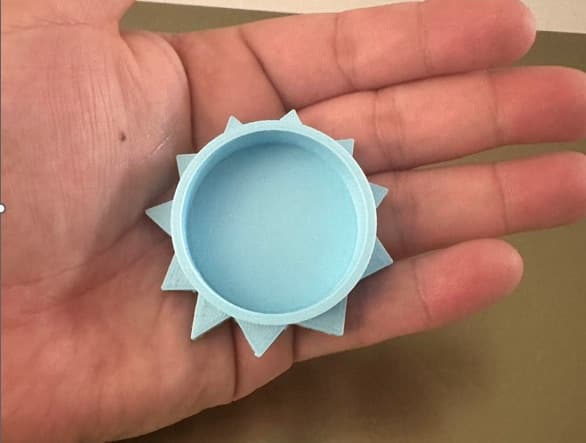
04PLA print
Checked in the hand.
Next build: a microcontroller with Wi-Fi and Bluetooth, GPS, and an audio module for the alarm.
What I'd do differently
Fifteen surveys and seven users were enough to pick a direction, not to prove it. The 2026 features are hypotheses too. On a real walk home, I'd measure:
Seconds
to find and hold the button by touch
False alarms
per week
Days a week
people actually wear it
A risk we never discussed
An incident map can make people more afraid than the facts justify. A safety product should leave people calmer.