Speculative Design / Branding
WeFlow
Duration
May - Jul 2022
Type
Independent · SAIC
Skills
Speculative Design, Service Design, Brand Identity, Design Research
Tools
Figma, Adobe Illustrator
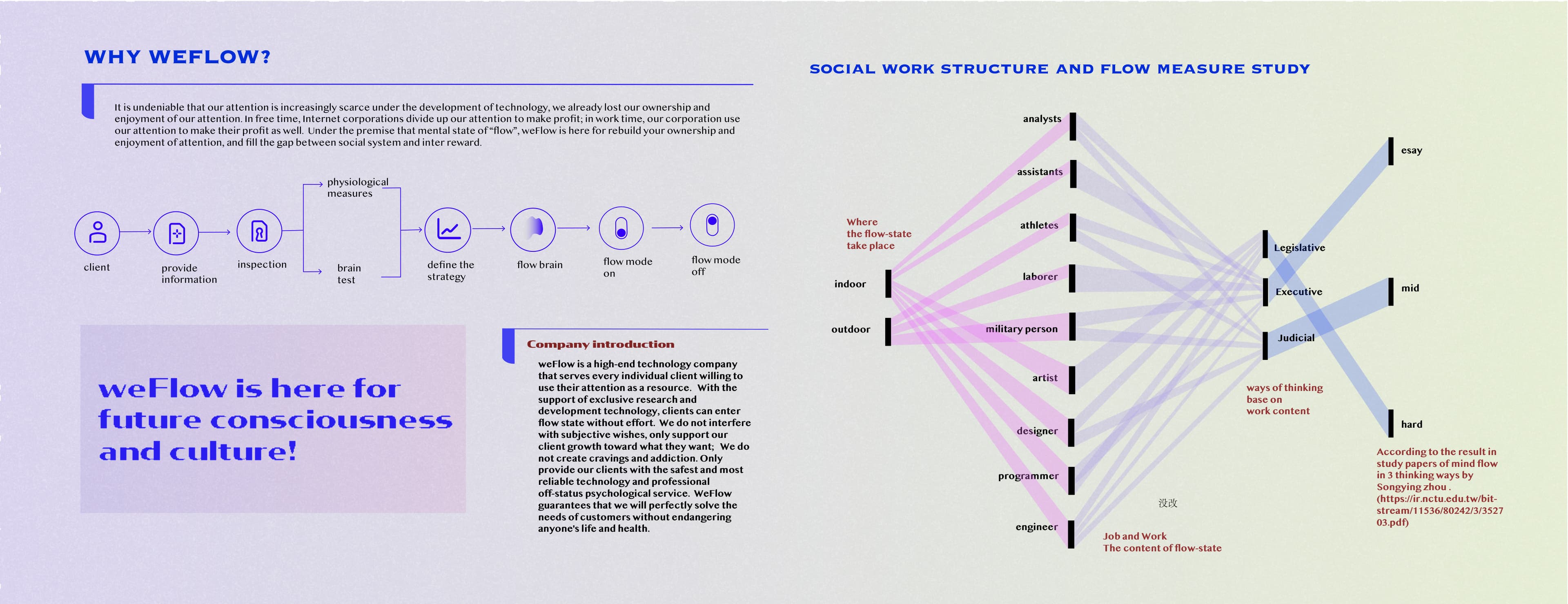
Your attention is no longer yours. Internet corporations have turned it into a resource to monetize.
Our attention flows constantly into one global brain, through phones, laptops, TVs and billboards. The companies on the other end understand how scarce it is, and they build their business models on capturing it. In our free time, platforms divide it up for profit. At work, employers spend it for theirs.
Since the industrial revolution we have organized ourselves around the clock, so managing attention became managing time. But time can't measure the quality of attention, only its length.
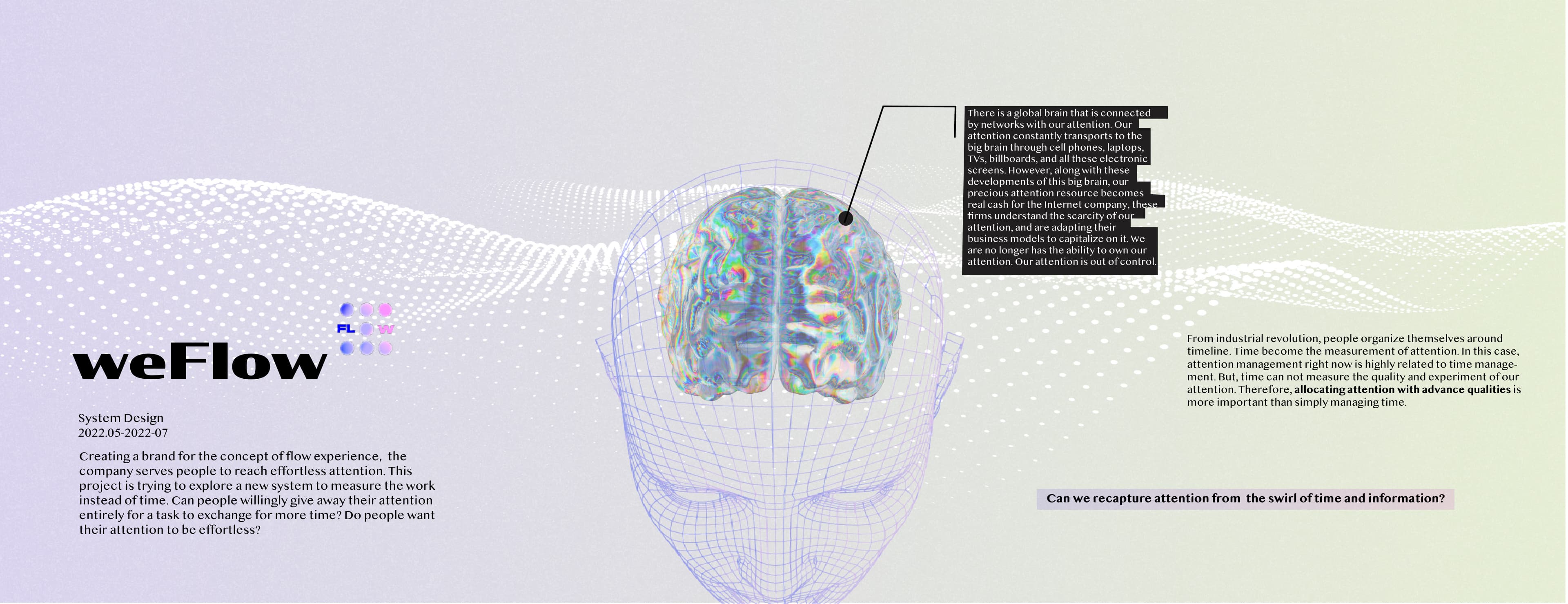
What if a company protected your attention instead?
WeFlow is that fictional company: a service that measures work by the quality of attention instead of hours, and helps people reach flow without effort. It doesn't exist. That's the point. The project builds it anyway, in full corporate fidelity, to ask two uncomfortable questions. Would people willingly give their attention entirely to one task in exchange for more time? And do we even want attention to be effortless?
Can attention be effortless?
First, I checked whether the company's promise had any basis in reality.
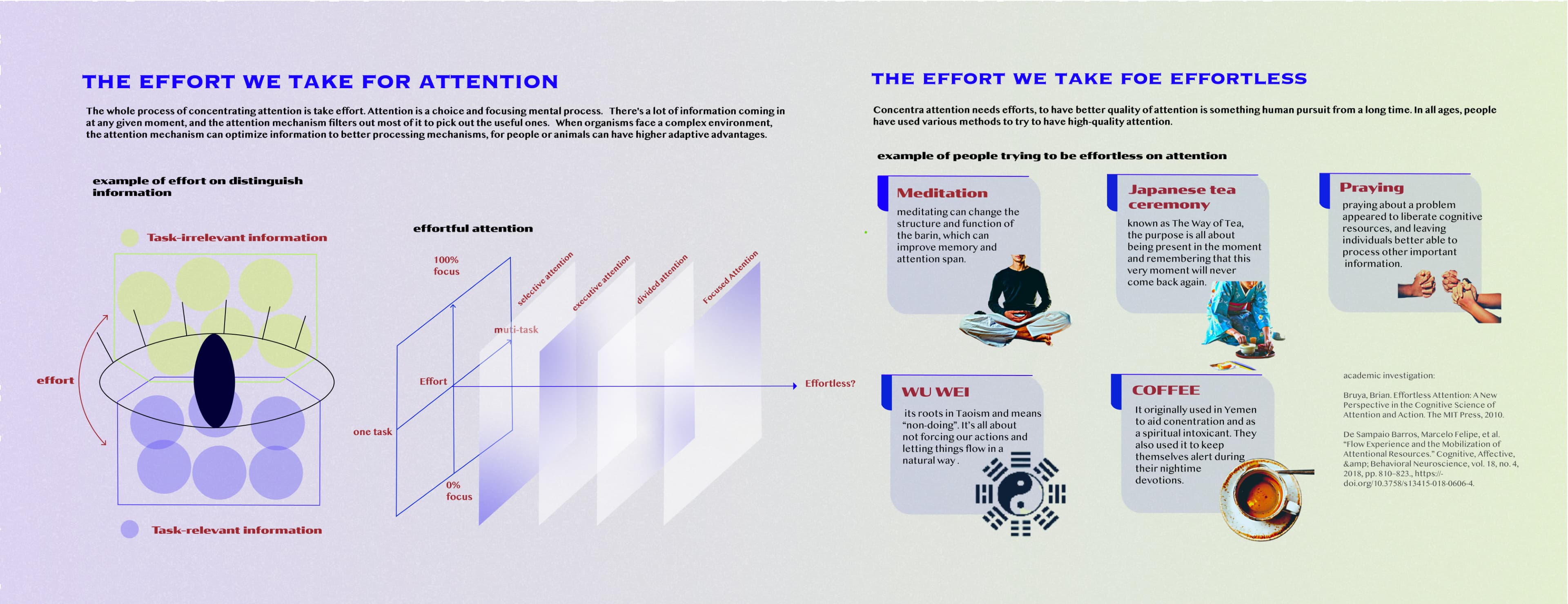
Attention takes effort
Focus means filtering out almost everything. People have always tried to make it lighter: meditation, prayer, the tea ceremony, wu wei, coffee.
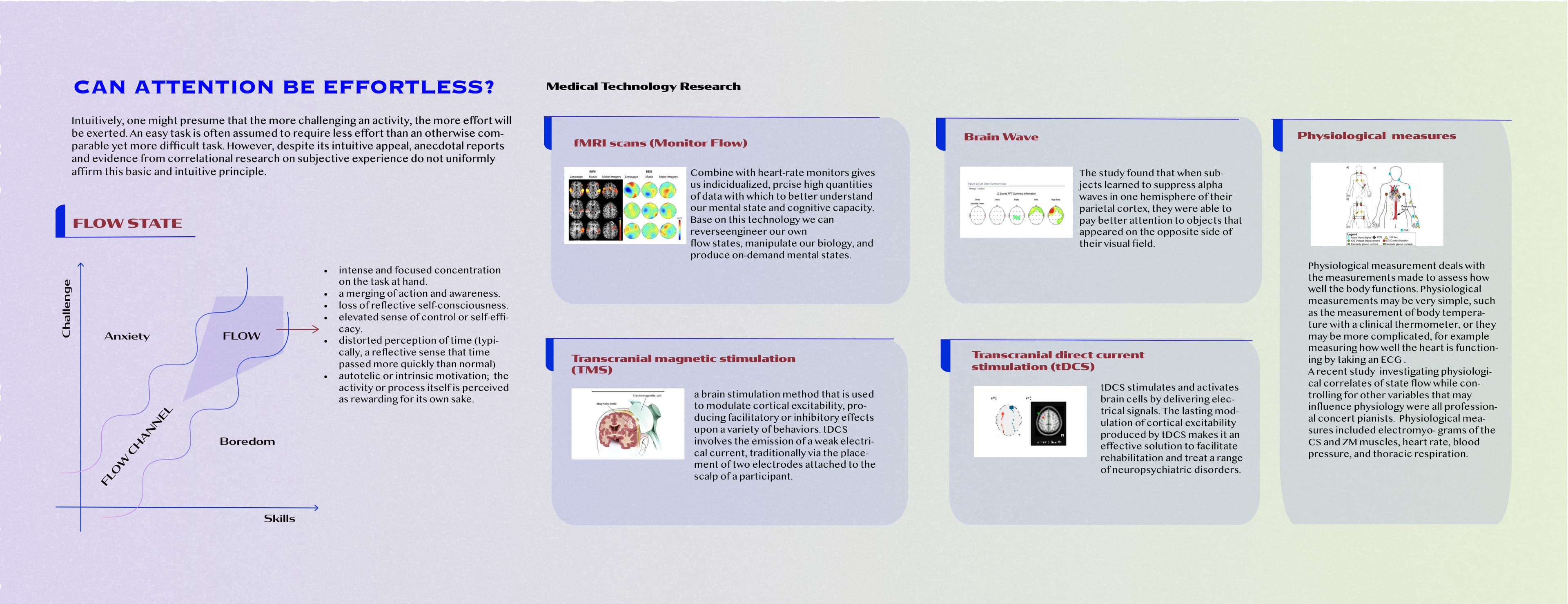
Flow is the effortless version
In flow, where challenge meets skill, hard work stops feeling like effort (Csikszentmihalyi; Bruya, 2010).
Flow can already be measured
EEG, fMRI and brain stimulation can already read and nudge mental states. So a company selling flow is not far-fetched.
A company from a nearby future
WeFlow presents itself as a high-end technology company for anyone willing to treat their attention as a resource. Its pitch is written the way real tech companies write theirs: clients enter flow “without effort”, the company “does not create cravings and addiction”, and every decision is “customer-centric”. Using that fluent corporate language is the critique. It is the same language the attention economy uses.
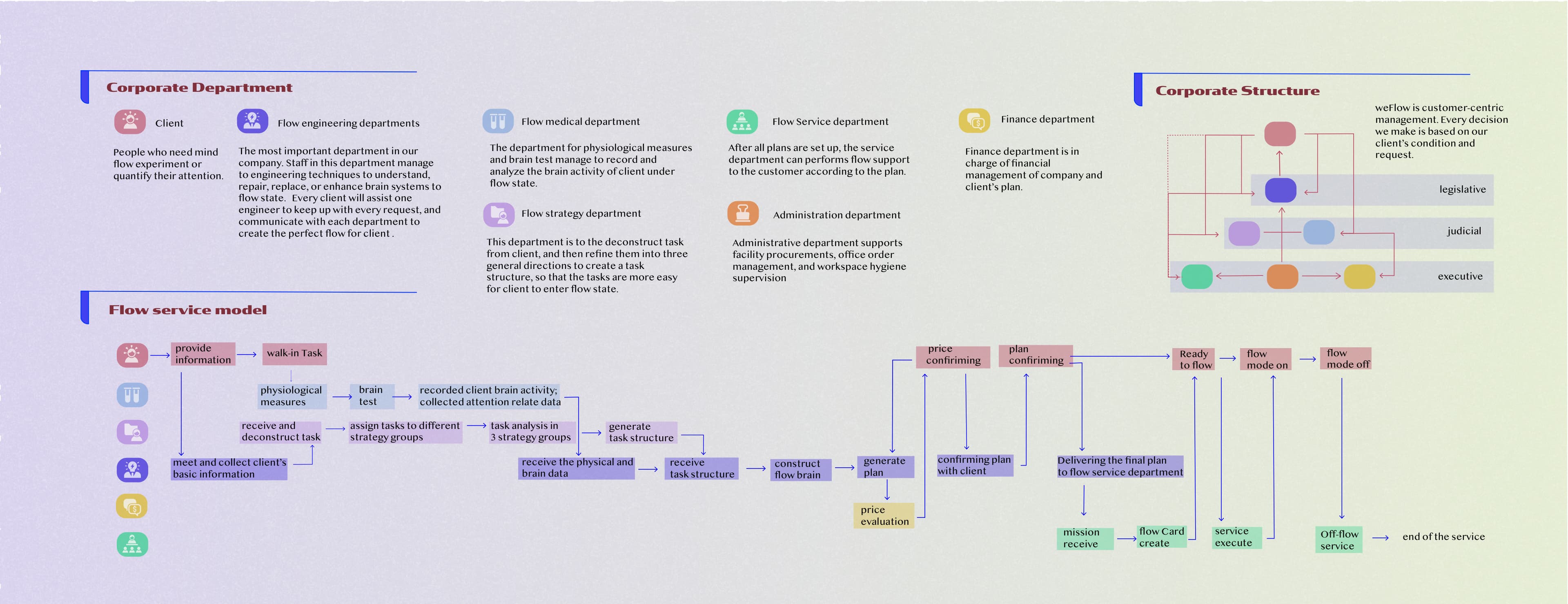
A client walks in with a task. The service takes them through a fixed sequence:
- Share basic information and the task.
- Physiological measures and a brain test record how their brain behaves in flow.
- The task is broken down and analyzed by three strategy groups.
- Engineers build a personal “flow brain” and a priced plan.
- The client confirms, receives a Flow Card, and switches flow mode on.
- When the task is done, an off-flow service helps them come back.
Behind it sits a full org chart: an engineering department that can “repair, replace, or enhance” brain systems, a service department that runs the brain tests, a strategy department, finance and administration. The three strategy groups borrow their names from government (Legislative, Executive, Judicial), based on a study of three ways of thinking that different kinds of work demand.
Making flow visible
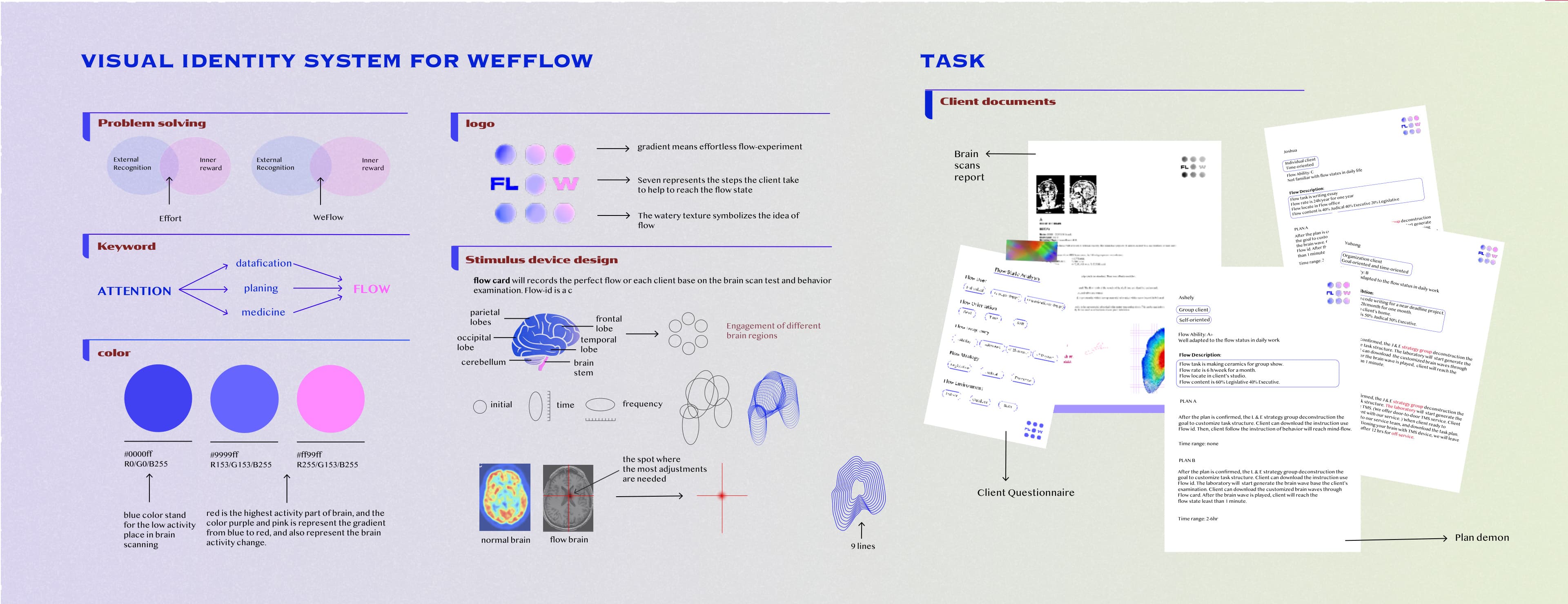
The brand had to look like something you could trust with your brain. Every element of the system comes from the idea of flow:
- The mark. The FLOW lettering is built from seven dots, one for each step a client takes to reach flow. The gradient stands for effortless flow, and the watery texture for flow itself.
- Color. The palette is taken from brain scans. Blue marks low activity, red the most active areas, and the purple-to-pink gradient between them is the brain changing state.
- The problem it solves.Today, external recognition and inner reward barely overlap. WeFlow's promise is to close that gap.
The system extends into the company's paperwork: brain scan reports, client questionnaires and plan documents, designed so the fiction holds up when you look closely.
The brand in its world
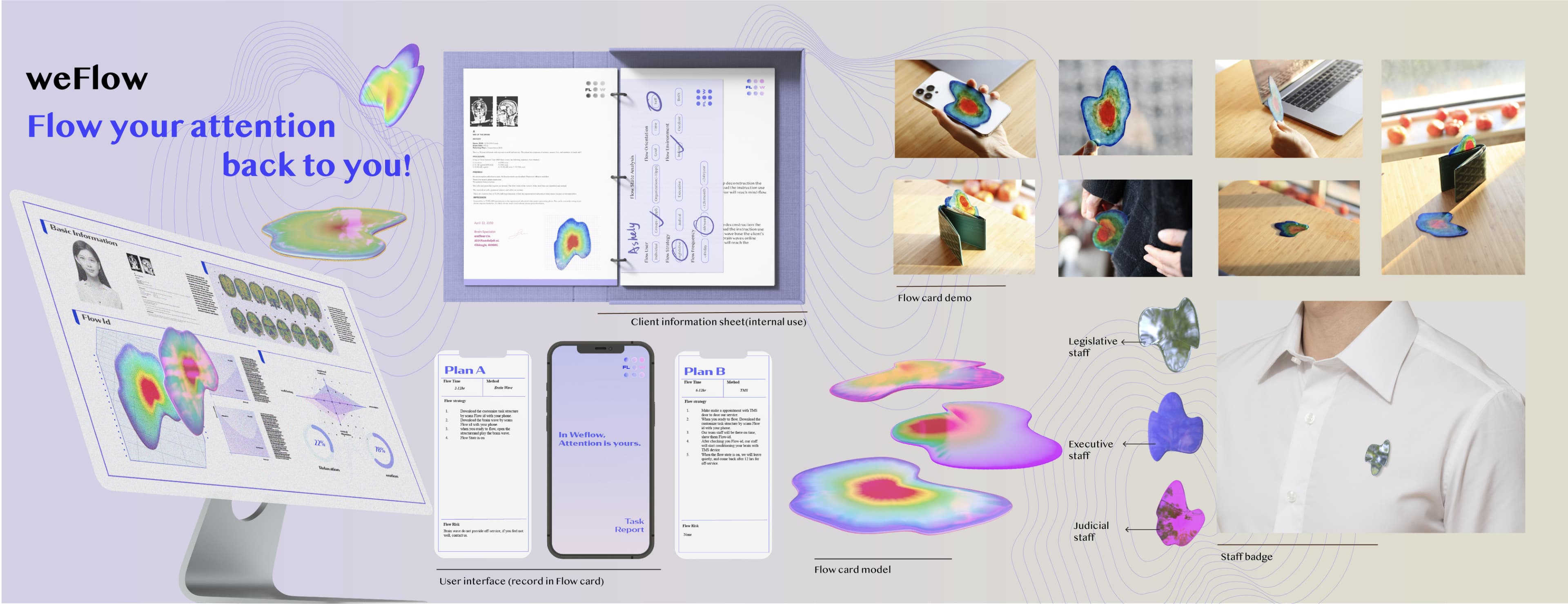
Applications are where the fiction becomes tangible. The centerpiece is the Flow Card: each client's ideal flow, recorded from their brain scan and behavior tests and shaped like a heat map of their own brain. It works as their Flow ID. Around it sit the touchpoints a WeFlow client or employee would actually meet: the client dashboard, the internal client information sheet, Plan A and Plan B in the app, and staff badges that show which strategy group someone belongs to. The tagline: “Flow your attention back to you.”